2026 Best Downlights What Certifications Should They Have?

Time:2026-09-27 Author:Charlotte
0%

A recessed downlight can look simple: a trim ring, a lens, and a switch. Behind the ceiling, however, heat, wiring, insulation, and long operating hours all affect safety and performance. The U.S. Department of Energy’s Energy Saver guidance says LED lighting uses at least 75% less energy and can last up to 25 times longer than incandescent lighting. Those figures describe LED lighting broadly, not every downlight. Product quality still depends on design, testing, and installation.

What certifications should high-quality downlights have? The answer depends on where and how the fixture will be used. In the United States, a recognized electrical safety mark, such as UL or ETL, indicates that a product has been evaluated against applicable safety requirements. ENERGY STAR qualification can help buyers identify products meeting defined efficiency and performance criteria. For commercial projects, DesignLights Consortium (DLC) listings may also matter, especially when incentive programs require them. Requirements vary by country, building type, and project.

A logo alone is not proof of a good light. Check the exact model number in the certifier’s database, then compare its listing with the product label and installation instructions. Look for clear ratings covering dimmers, damp or wet locations, and contact with insulation where relevant. Small details matter: a missing model suffix can change what a listing covers. And standards change. This guide examines the evidence behind common downlight certifications for 2026, while recognizing that certification cannot replace careful installation or independent judgment.
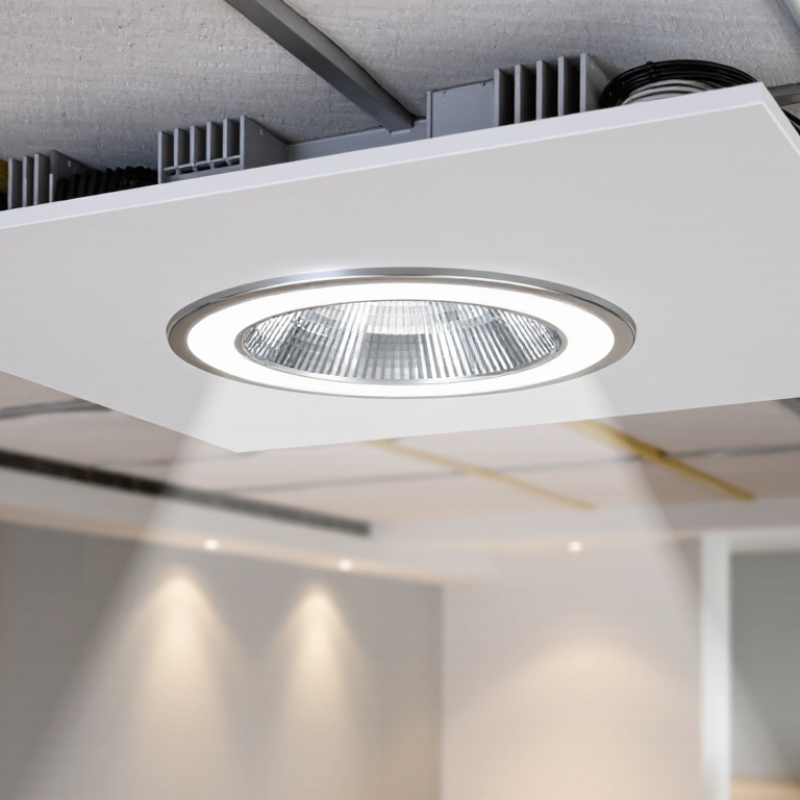
2026 Best Downlights What Certifications Should They Have?

What Downlight Certifications Mean and Why They Matter

Downlight certifications are evidence, not decoration. A safety mark such as UL or ETL indicates that a product was tested against applicable electrical-safety requirements. For recessed fixtures, check that the listing covers the complete luminaire and its intended installation, including contact with insulation where relevant. A mark on one component does not certify every part of the fixture. Look for a traceable listing and installation instructions, not just a logo.

Performance labels answer different questions. ENERGY STAR certification evaluates efficiency and product performance against defined criteria; it does not replace electrical-safety testing. The U.S. Department of Energy’s Energy Saver guidance reports that LED lighting uses at least 75% less energy and lasts up to 25 times longer than incandescent lighting. Those figures describe LEDs broadly, not every downlight in every installation. Dimming, heat, and incompatible controls can affect real-world results. Small detail, big consequence.

For commercial projects, DLC qualification can help specifiers compare tested lighting performance, but it is not a universal requirement for homes. Check the current product listing, color temperature, dimmer compatibility, and whether the certification applies to the exact model. Certification reduces uncertainty. It cannot fix a poor installation, and labels are easy to misread when product names differ by one character.

2026 Best Downlights: What Certifications Should They Have?

Downlight compliance depends on the target market and installation environment. The chart compares the protection levels represented by common IP codes under IEC 60529. IP codes are not product safety certifications by themselves; they describe resistance to solids and water when verified through the applicable testing process.

IEC/EN 60598-1

The core international and European safety standard for luminaires, covering electrical, mechanical, thermal and construction requirements.

UL 1598

A North American safety standard for luminaires. It addresses risks such as electric shock, fire, abnormal operation and temperature.

EMC and substance requirements

FCC Part 15 addresses unintended radio-frequency emissions in the United States, while RoHS restricts specified hazardous substances in electrical products.

Choose the correct IP rating

For dry indoor areas, IP20 may be suitable. Damp or exposed locations may require higher protection, subject to local codes and the installation instructions.

Reference framework: IEC 60529 IP Code. The first IP digit rates protection against solid objects and dust from 0–6; the second rates protection against water from 0–9K. Always verify the product certificate, test report, marking and local electrical requirements.

Which Electrical Safety Marks Should Downlights Carry?

For 2026, downlights should carry safety marks that match their installation market. The CE mark supports European conformity, but it is not an independent quality certificate. In the United Kingdom, UKCA may apply, while CCC applies in China. Australia and New Zealand generally require the RCM framework. North American projects should seek a recognized testing-laboratory mark.

Look beyond the logo.

A reliable downlight should reference IEC 60598-1 and the relevant recessed-luminaire requirements in IEC 60598-2-2. These standards address electric shock, insulation, heat, wiring, and mechanical construction.

The IEC 60529 IP rating also matters in bathrooms and covered outdoor areas. IP44 may resist splashes, but it does not automatically make a fitting suitable for every wet location. Local building rules still control fire-rated ceiling use.

The International Energy Agency reported in its 2023 Energy Efficiency Market Report that lighting uses about 15% of global electricity. That scale makes thermal and electrical testing important, not cosmetic. The European Commission’s 2023 Safety Gate report also continued to identify electrical appliances and equipment among frequently notified product groups. Buyers should check the certificate number, tested model, input voltage, laboratory, and report date. A printed mark can be copied. This is the uncomfortable part. A certificate may cover one model, while a supplier quietly changes the driver or housing. Ask for current test evidence, installation instructions, and traceable production details before approval.

How Energy Efficiency and Performance Certifications Are Assessed

For a downlight, efficiency certification is more useful when it reports measured light output and input power, not just a broad “energy-saving” claim. Check lumens per watt, then compare products at similar brightness and color temperature. The U.S. Department of Energy says residential LEDs use at least 75% less energy and last up to 25 times longer than incandescent lighting. That benchmark describes LEDs broadly, not every downlight. A certified product still needs checking at the intended dimming level.

Performance testing adds detail. ENERGY STAR’s lighting criteria evaluate factors such as efficacy, color quality, and product performance; independent laboratory testing helps verify that published figures are not merely estimates. Look for a recognized certification listing, test standard, and model number that match the fixture in your hand. Small print matters. A high lumen-per-watt figure may not tell you whether the beam creates harsh glare or whether dimming causes flicker. Certification is a useful filter, not a promise of perfect comfort. Even careful reports cannot fully recreate a low ceiling, pale walls, or a late-night kitchen.

Which Regional Approvals Apply to Downlights in 2026?

Regional approval depends on where a downlight is sold and installed. In the United States, check for certification to applicable electrical safety standards from an accepted testing body; UL or ETL marks are common examples. In Canada, look for certification recognized for Canadian use, such as CSA or an equivalent mark. A mark alone is not enough: verify the model number and intended installation in the certification record.

For the EU and EEA, CE marking indicates the manufacturer’s declared conformity with relevant requirements; it is not an independent quality award. Great Britain may require UKCA marking, while Northern Ireland follows different arrangements. In Australia and New Zealand, check applicable electrical compliance and supplier registration, including RCM requirements where relevant. Rules can change, so confirm current requirements with the local authority or a qualified compliance professional before purchase.

Approval is only part of the decision. Match the downlight’s rated voltage, insulation conditions, and installation instructions to the ceiling assembly. In a bathroom, confirm the required ingress protection for the exact location. Where a ceiling has a fire rating, the complete installation may need to preserve it; a fire-rated product alone may not do so. Keep the test reports and installation records. Small detail, big consequence. I’d still verify the exact variant, since one product family can include models with different approvals.

How to Verify Certification Claims Before Choosing a Downlight

A certification logo on a downlight is only a starting point. Check the exact model number on the certificate, product label, and packaging. They should match. A certificate may cover one trim, driver, or voltage option, not every product in a range. Read the scope carefully, including any installation limits.

Look up the certificate number in the issuing organization’s public directory, where available. Confirm the document is current and applies to the market where the light will be installed. Ask the supplier for the full certificate and test report if details are unclear. Check who issued them, what standards were assessed, and whether the tested configuration matches the downlight you plan to buy. Small details matter, such as insulation-contact ratings, damp-location suitability, and required clearances. Don’t rely on a cropped logo. Keep a copy of the documents with the product records. I have seen paperwork that looked convincing but described a different variant; it is easy to miss when comparing several similar fittings. If a claim cannot be verified, pause and request clarification before ordering.

FAQS

What does a safety certification tell me about a downlight?

It indicates that the listed product was tested against relevant electrical-safety requirements. Check that the listing covers the complete fixture and intended installation. A component mark alone is not enough.

Do efficiency labels replace electrical-safety certification?

No. Efficiency labels assess energy use and performance, while safety certifications address electrical risks. They answer different questions.

How can I compare downlight efficiency fairly?

Compare lumens per watt at similar brightness and color temperature. Also check measured light output and input power. A high efficiency figure alone may hide glare or poor dimming.

Do LED energy savings apply to every downlight?

No. LEDs broadly use less energy than incandescent lighting, but actual results vary. Dimming, heat, and incompatible controls can change performance.

Which approval should I look for in my region?

Requirements vary by location. Check the current rules and the exact model’s listing before buying. A familiar mark may not cover every variant.

Does a CE mark mean a downlight passed independent quality testing?

Not necessarily. CE marking reflects the manufacturer’s declared conformity with relevant requirements. It is not an independent quality award.

What should I check before installing a downlight in a bathroom?

Confirm the ingress protection rating suits the exact location. Match the fixture’s voltage and installation instructions to the ceiling. Small details matter.

Does a fire-rated downlight automatically preserve a fire-rated ceiling?

No. The complete installation may need to preserve the ceiling’s fire rating. Keep installation records, and verify the exact fixture version.

Conclusion

Choosing the right downlight in 2026 means looking beyond appearance and price. What certifications should high-quality downlights have? They should carry relevant electrical safety marks for the market where they will be installed, supported by testing that addresses risks such as electric shock, overheating, and fire. Energy-efficiency and performance assessments can also help buyers compare power use, light output, color consistency, and expected service life. The specific approvals required may differ by region, so a certification accepted in one market may not be sufficient in another.

Before choosing a product, check that its certification details match the exact model, not just the product range or manufacturer. Review labels, technical documents, and test information, and confirm that the issuing organization and approval are credible and current. These checks help ensure a downlight is suitable for its intended installation and performs as claimed.

Charlotte

Charlotte

Charlotte is a seasoned marketing professional with a deep understanding of the company's portfolio and a passion for elevating its presence in the market. With a keen eye for detail and a commitment to excellence, she ensures that our professional blog is regularly updated with insightful articles......