Downlights create clean, focused lighting, but their small housings often face demanding conditions. Bathrooms, kitchens, balconies, and covered patios can expose fittings to steam, splashes, condensation, and dust. A tiny gap around a ceiling cutout may become a hidden entry point for moisture. Over time, that moisture can affect wiring, drivers, insulation, and surrounding ceiling materials.
Why do downlights need waterproof features? The answer involves more than preventing water damage. Proper protection supports safer operation, longer service life, and steadier lighting performance. It can also reduce maintenance in places where removing a fitting is difficult. In a bathroom, for example, a suitable downlight should match the installation zone and carry an appropriate IP rating. That rating must be checked against the product specification, not guessed from appearance. Waterproof does not mean suitable for every location.
Experienced electricians also consider ceiling construction, ventilation, drainage, and installation quality. A well-sealed fitting may still perform poorly if the cable entry is exposed or the wrong driver is used. Product testing and certified documentation provide stronger evidence than marketing claims. Still, even careful planning has limits. Condensation patterns can change with seasons, and a dry ceiling today may not stay dry tomorrow. This article explores the top ten reasons waterproof features matter, while examining practical choices, common oversights, and the details that influence reliable downlight performance. Small details matter. Safety should never depend on assumptions.
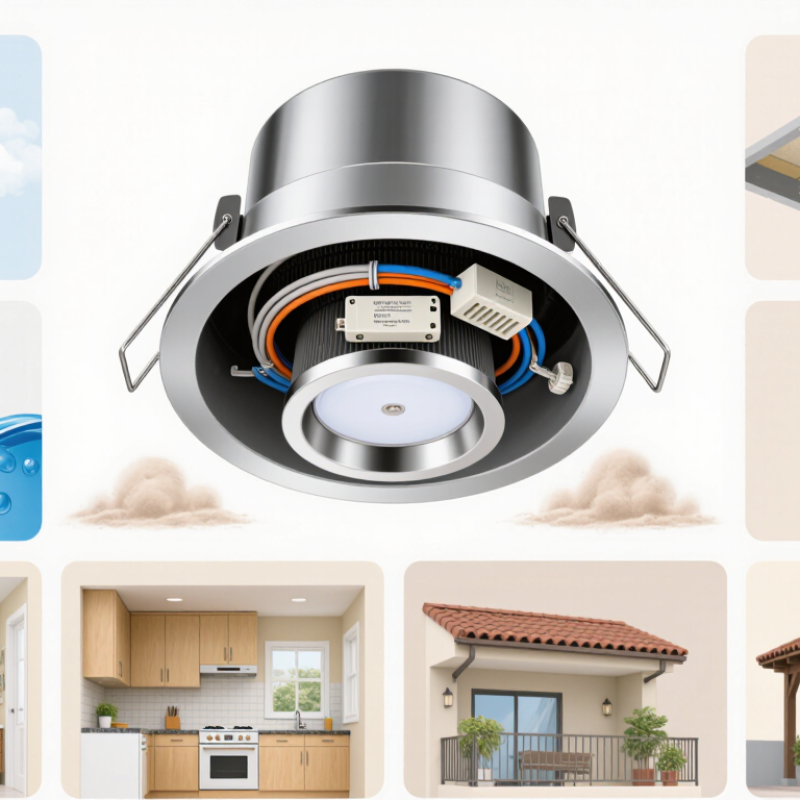
Waterproof downlights are recessed LED fixtures designed to resist water and moisture. Their sealed housing, protective lens, and rubber gasket help prevent water from reaching electrical parts. Many models use an IP rating to show their protection level. For example, a higher second digit usually indicates stronger resistance to water.
In bathrooms, waterproof downlights are commonly installed near showers, bathtubs, and sinks. They can also serve covered balconies, porch ceilings, laundry rooms, kitchens, and outdoor walkways. In these areas, steam, splashes, condensation, or wind-driven rain can affect ordinary lighting. A properly sealed downlight provides clearer illumination without exposing sensitive components. Installers should still follow local electrical rules and respect bathroom safety zones. Placement matters as much as the fixture.
Waterproof does not mean careless installation. The ceiling cutout must fit closely, and the gasket should remain flat. One detail is easy to miss. Dust, paint, or a damaged seal can weaken moisture protection over time. In coastal locations, salt air may also corrode exposed parts, even when the light has suitable water resistance. An experienced electrician checks the rating, cable entry, drainage conditions, and ceiling material before installation. No fixture is invincible. A reliable result depends on matching the downlight to its environment, not simply choosing the highest rating.
| No. | Reason for Waterproof Features | Typical Water Exposure | Relevant IP Protection | Common Application Areas | Practical Design or Installation Requirement |
|---|---|---|---|---|---|
| 1 | Protection from splashing water | Water droplets or splashes from multiple directions | IPX4 or higher | Bathrooms outside the directly sprayed area, laundry rooms, covered outdoor walkways | Use a sealed trim, gasket, and suitable ceiling junction box. The product must also comply with local wet-location wiring requirements. |
| 2 | Resistance to rain and wind-driven moisture | Rainfall, wind-blown spray, and damp outdoor air | IPX4–IPX5 | Porches, balconies, covered entrances, carports, and sheltered terraces | Select a luminaire rated for the actual exposure. A covered location does not automatically make an indoor-rated downlight suitable outdoors. |
| 3 | Protection against water jets | Strong cleaning spray or water jets directed at the fitting | IPX5 | Washrooms, commercial cleaning areas, outdoor service zones, and some industrial spaces | IPX5 resists water jets under specified test conditions, but it does not mean the fitting is suitable for immersion or unrestricted high-pressure washing. |
| 4 | Prevention of dust and moisture ingress | Fine dust combined with humidity or airborne particles | IP54–IP65 | Workshops, utility rooms, garages, dusty retail backrooms, and sheltered industrial areas | The first IP digit addresses solid-particle protection, while the second addresses water protection. Choose both ratings according to the environment. |
| 5 | Reduced risk of condensation-related damage | Temperature changes causing moisture to form inside or around the fitting | IP44 or higher | Bathrooms, saunas outside direct steam zones, coastal buildings, and poorly ventilated spaces | A sealed optical compartment and correctly fitted gasket help limit moisture entry. Adequate ventilation and correct ceiling insulation clearance remain necessary. |
| 6 | Safer use in wet bathroom zones | Shower spray, bath splashes, and persistent humidity | Often IPX4–IPX7* | Shower rooms, bathrooms, wet rooms, and areas near baths or basins | The required rating depends on the installation zone and local electrical code. IP rating alone does not replace required separation distances or residual-current protection. |
| 7 | Improved durability in coastal environments | Humidity, salt-laden air, and occasional rain | IP54–IP65 | Seaside homes, balconies, hotels, promenades, and marine-adjacent buildings | Waterproofing should be combined with corrosion-resistant materials, suitable coatings, and stainless or otherwise appropriate fasteners. |
| 8 | Protection during routine cleaning | Damp cloths, splashes, and controlled cleaning fluids | IP44–IP65 | Hotels, restaurants, healthcare facilities, kitchens, and public facilities | Follow the cleaning instructions. Do not spray cleaning chemicals directly onto the light unless the product is specifically approved for that method. |
| 9 | Protection in partially exposed outdoor areas | Direct or indirect rain, splashback, and surface runoff | IP65 | Open-sided canopies, garden structures, outdoor stairs, pool-deck perimeters, and exterior soffits | IP65 is dust-tight and protected against water jets. It is not an immersion rating; avoid locations where water can collect around the luminaire. |
| 10 | Resistance to temporary immersion | Short-term accidental flooding or temporary submersion | IP67 | Low-level outdoor features, areas prone to temporary flooding, and specially designed wet installations | IP67 generally indicates protection against temporary immersion up to 1 metre for a specified test duration under IEC 60529. It does not indicate protection against continuous underwater operation. |
Note: IP ratings are defined under IEC 60529 test conditions. The appropriate rating depends on the actual location, water exposure, installation method, local electrical regulations, and the luminaire manufacturer’s instructions. *Bathroom-zone requirements vary by country and electrical code.
Moisture enters through trim gaps, cable entries, or uneven ceiling cutouts. Condensation can reach terminals, drivers, and insulation. Corrosion raises resistance and creates heat. Small gaps matter.
IP65 resists dust and water jets under specified test conditions. It does not guarantee safe use in every bathroom location. Installation quality still matters. Not automatically suitable.
IP67 supports temporary immersion, but a higher rating is not automatically safer. Heat release, ceiling ventilation, and driver placement remain important. Check the actual location.
Check the IP marking, instructions, seals, cable entry, and housing material. Confirm the cutout diameter, wattage, insulation compatibility, colour temperature, and dimmer requirements. Take a second measurement.
Yes. An uneven ceiling can prevent the gasket from sealing evenly. A loose spring clip or unsealed connector may admit steam. The fitting may look sealed. I would recheck the ceiling surface.
Keep connectors above likely condensation paths. Some drivers must remain outside damp areas. Follow installation instructions and local electrical requirements. Keep them accessible for inspection.
Watch for flickering, discoloration, unusual heat, corrosion, water stains, or repeatedly tripped protection. A small stain deserves attention. Stop guessing. Have a qualified person inspect the circuit.
Choose a fitting rated for the real wet location and install every seal carefully. Keep ventilation paths clear and inspect the ceiling occasionally. Ask about replacement seals and warranty support. No fixture is maintenance-free. I might overlook condensation until damage appears.
Waterproof downlights are lighting fixtures designed with sealed housings, protective gaskets, and moisture-resistant components, making them suitable for bathrooms, kitchens, balconies, covered outdoor areas, and other damp environments. Why do downlights need waterproof features? Moisture can enter unprotected fixtures, causing corrosion, short circuits, flickering, insulation damage, and potential electrical hazards. Waterproof construction helps prevent water and condensation from reaching sensitive internal parts, improving safety wherever humidity or splashes are common.
Sealed downlights also tend to last longer because they are better protected from rust, dust, and repeated exposure to moisture. This can reduce maintenance, replacement frequency, and long-term operating costs. When choosing waterproof downlights, check the appropriate IP rating, sealing quality, material durability, heat dissipation, installation requirements, and compatibility with the intended location. Selecting the right protection level ensures reliable performance without sacrificing lighting quality or energy efficiency.

 Diva Lights