Engineered for architectural, commercial, and high-spec industrial applications globally.
The global transition from legacy incandescent source fixtures to high-efficiency solid-state lighting (SSL) technologies has established the A19 LED bulb as the definitive standard for omnidirectional utility illumination. For procurement executives, sourcing agents, and engineering leads managing large-scale commercial, hospitality, and residential development projects, selecting the right manufacturing partner in China is no longer merely a transaction based on unit price. It requires a detailed evaluation of technical parameters, materials supply chain reliability, and rigorous regulatory compliance.
In major consumer and industrial markets across North America, Europe, and Asia-Pacific, procurement demands have matured. Modern projects demand lighting solutions characterized by high luminous efficacy (exceeding 120 lm/W), color fidelity (CRI > 90, R9 > 50), and intelligent control protocol compatibility. The standard A19 envelope (ANSI C78.20 compliant) must house sophisticated driver topologies and advanced LED packaging that can withstand continuous operational stresses.
China’s manufacturing clusters, particularly in Guangdong (Foshan, Zhongshan, Shenzhen) and Zhejiang, remain the cornerstone of the global SSL supply chain. These hubs provide unmatched vertical integration—from raw semiconductor substrate processing and LED packaging to automated driver PCB assembly and photometric testing. However, navigating these clusters demands a rigorous methodology for auditing factories to ensure they can deliver consistent, high-yield productions matching domestic performance standards (such as Energy Star V2.1 and Title 24 compliance in the USA, or ErP directive guidelines in Europe).
Industrial scale lighting retrofits and structural developments require system-wide solutions rather than off-the-shelf purchases. High-performing A19 LED bulbs must align with specific operational environment dynamics. Below are the core vertical-market solutions tailored by premier OEM/ODM manufacturers in China:
Maximizing energy savings while ensuring tenant comfort. Solutions utilize flicker-free driver topologies (conforming to IEEE 1789-2015 recommendations) and constant current ICs to minimize eye strain and screen glare in office structures.
Utilizing specialized high-CRI (R9 > 60) solutions that render fabric and merchandise colors with high fidelity. Perfect replication of daylight properties under the TM-30-18 standard ensures enhanced visual merchandise appeal.
Engineered with rugged polycarbonate and PBT housings containing advanced aluminum heat sinks. These configurations withstand vibration, line-voltage fluctuations, and elevated ambient operating temperatures.
The basic anatomy of an A19 LED bulb dictates its performance limits. As a buyer, understanding the technical roadmap separates entry-level manufacturers from tier-one technology partners. Current and upcoming technology roadmaps revolve around three pillars: Thermal, Optical, and Driver Efficiency.
| Performance Class | Typical Luminous Efficacy | Driver Architecture | Thermal Management Material | Primary Smart Protocols |
|---|---|---|---|---|
| Legacy Standard | 80 - 95 Lm/W | Linear IC / Non-isolated | PBT Plastic Base | Triac Dimmable (Analog) |
| Enterprise High-Spec | 110 - 130 Lm/W | Constant Current Switch-Mode | Thermally Conductive Ceramic/Alum. | 0-10V / DALI Control |
| Next-Gen Advanced | > 150 Lm/W | Buck-Boost Isolated Smart Driver | Graphene-Infused Composite Polymers | Matter / Zigbee / BLE Mesh |
Traditional SMD (Surface Mounted Device) arrays require an internal diffuser dome to scatter light, which can reduce total system efficiency by 10-15%. In contrast, modern LED Filament technologies pack micro-LED chips onto linear sapphire or glass substrates. Covered in phosphor-containing resin, these filaments radiate in a true 360-degree, omnidirectional pattern. This mimics legacy incandescent light distribution without requiring heavy diffusers, pushing efficacy levels beyond 150 lm/W.
The driver is the most critical component determining the actual lifetime of an A19 bulb. High-spec China factories utilize multi-stage isolated drivers designed with electrolytic capacitors rated for at least 10,000 hours at 105°C. Lower-tier suppliers often cut costs by using non-isolated linear drivers that pass voltage spikes directly to the LED chip. These run hotter and fail prematurely in enclosed fixtures.
"Deep engineering analysis proves that thermal degradation of the driver capacitor accounts for over 70% of premature LED failures. Sourcing A19 bulbs with integrated thermal shutdown circuits and high-temperature capacitor limits is non-negotiable for commercial infrastructure."
The integration of IoT connectivity within the A19 envelope represents a massive shift. Top-tier Chinese manufacturers now construct A19 bulbs containing multi-protocol wireless modules. These support Wi-Fi, Bluetooth Low Energy (BLE) Mesh, and Zigbee 3.0. The standard is currently evolving toward **Matter**, a unified smart home connectivity standard supported by major tech companies.
Matter compatibility ensures that smart A19 bulbs can seamlessly integrate into existing building management systems (BMS) without requiring expensive custom bridges. Furthermore, the integration of Tunable White technology (ranging from 2700K to 6500K) and color-changing RGB capabilities enables Human Centric Lighting (HCL). HCL actively adjusts color temperatures to align with natural circadian rhythms, improving productivity and comfort in modern offices and hospitals.
Continuous Innovation, Strict Quality Control, and Decades of Architectural Manufacturing Expertise.
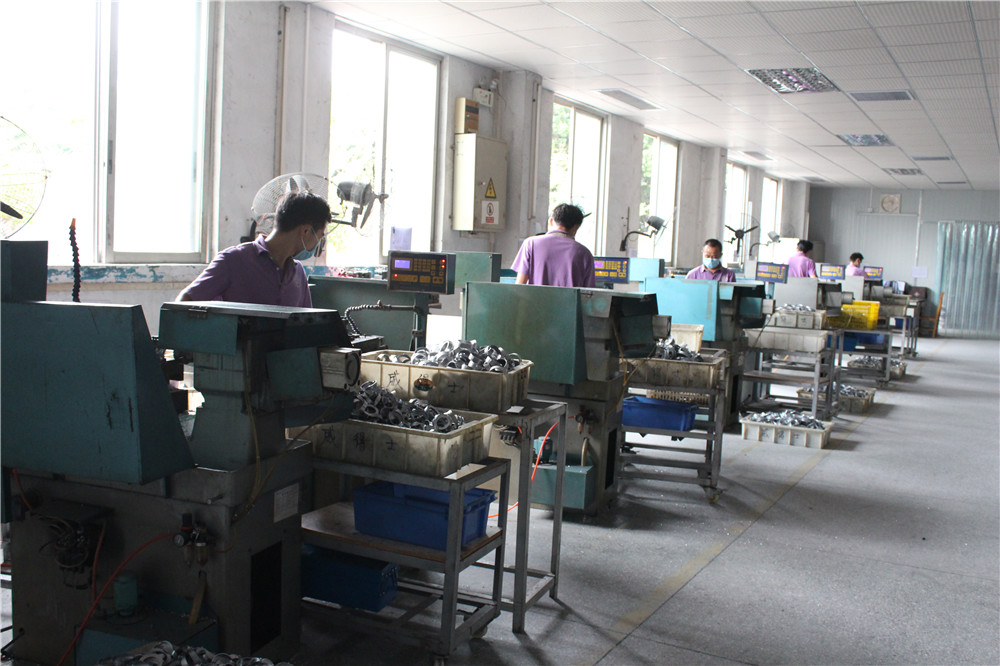
Founded in Foshan, China in 2000, Diva Lighting was established with a focus on continuous innovation and strict quality control. Over the past two decades, the company has grown into a leading manufacturer. Its state-of-the-art facility in Foshan, Guangdong covers an area of 15,000 square meters and houses more than 150 employees.
Diva’s sales headquarters and product development center occupy 1,200 square meters of modern office space in downtown Foshan. Here, an innovative R&D team designs creative solid-state lighting and downlight systems. Diva focuses on manufacturing high-performance downlights and retrofits, ensuring all products strictly meet global fire and electrical safety requirements to help make homes and workspaces safer.
The company maintains OHSAS18001:2007 and ISO14001:2004 certifications, demonstrating its commitment to safety and environmental standards. Diva's products are manufactured in accordance with CE, EMC, ENEC, UL, and RoHS standards. By integrating high-quality components—such as drivers from TRIDONIC and LED light sources from CITIZEN, BRIDGELUX, and CREE—Diva guarantees stability and longevity.
With more than 280 patents in China, Europe, and North America, Diva remains at the forefront of the industry. The company is committed to delivering reliable customer service, innovative products, and stable quality.
Our Mission: Helping customers achieve business success, and working for a safer and better world.
Our Value: Customer satisfaction, pragmatic innovation, speed and efficiency, and open cooperation.
Our Vision: Creating industry-leading products and establishing ourselves as a premier brand in specialized lighting segments.
Successfully importing products from a manufacturing partner in China depends heavily on regulatory alignment. Navigating regional safety standards and building regulations is essential. A professional supplier must offer dedicated localization support:
To meet these diverse needs, leading factories offer comprehensive OEM/ODM customization. This includes custom branding, custom CCT tuning, modified beam angles, and private-label packaging designed to meet the compliance requirements of your target market.
Technical clarifications directly from factory engineers to help guide your purchasing decisions.
Engineered for commercial, hospitality, and residential projects.
 Diva Lights